Cloister (28th of July 2009)
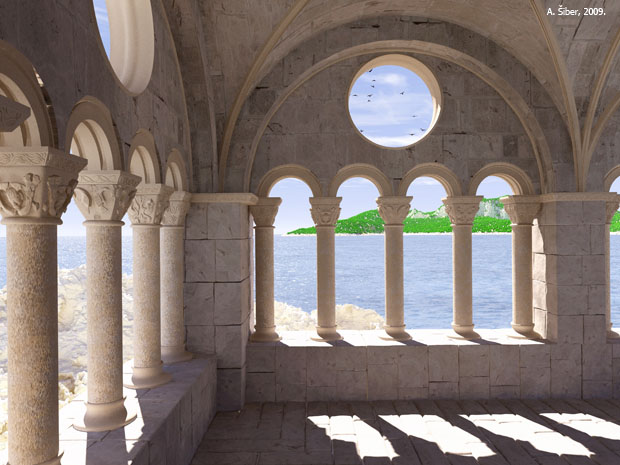
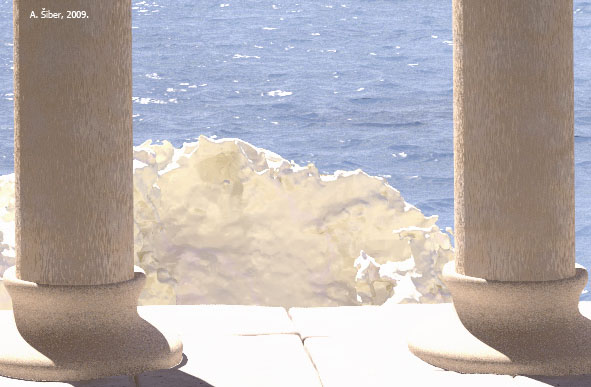
"Can you see this wealth? This rock here and the sea, the plants growing from the rock... Can you recognize this wealth? This place where we are now..." He just stares. Doesn't know what to say knowing that the rock and the sea will be there for a million years, and that the two of them have... perhaps thirty more? Still, he says: "Well, yes. You are right."
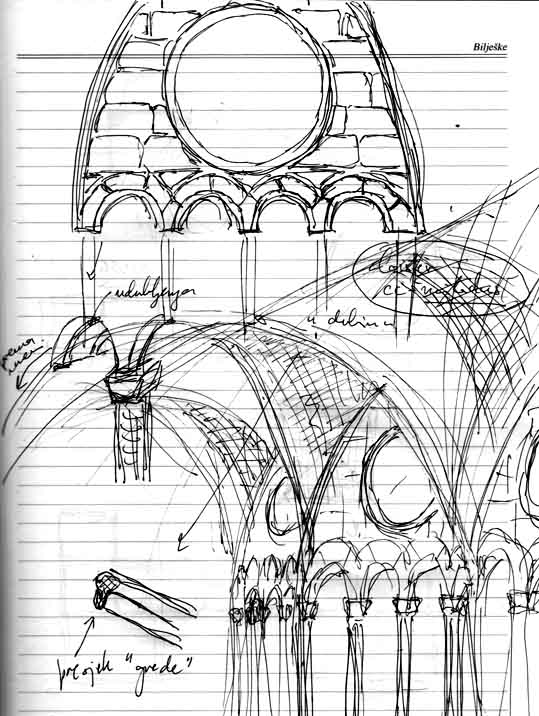
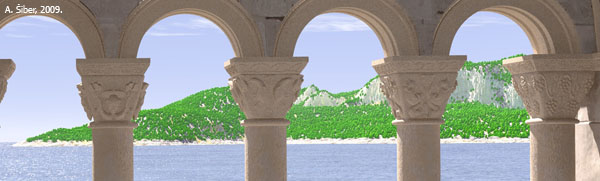
As if all this happened to someone else. Your life, and yet, so foreign. There were some places, some time, the pieces of memory no livelier than a photo. And then one day you wake up with some word. Cloister. And you wonder what that is. And you find out that you've already been there. In those times that seem as someone's elses. You unearth the cloisters from those times of yours where they ment nothing to you and you polish them for this time.
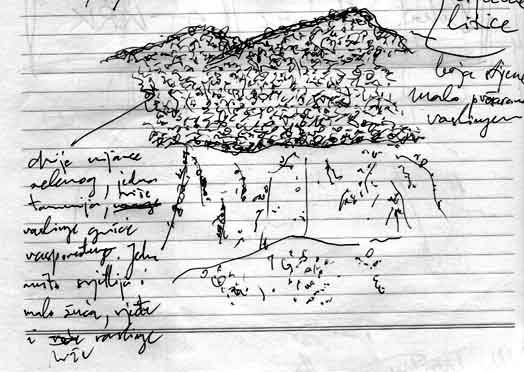
Two hues of green. One darker, taller vegetation, more densely extended. The other one somewhat lighter and a bit more yellow, less dense and shorter vegetation.
>> International center of Medieval Art
>> Corpus Narratologicum - An Index of Medieval Narrative Art
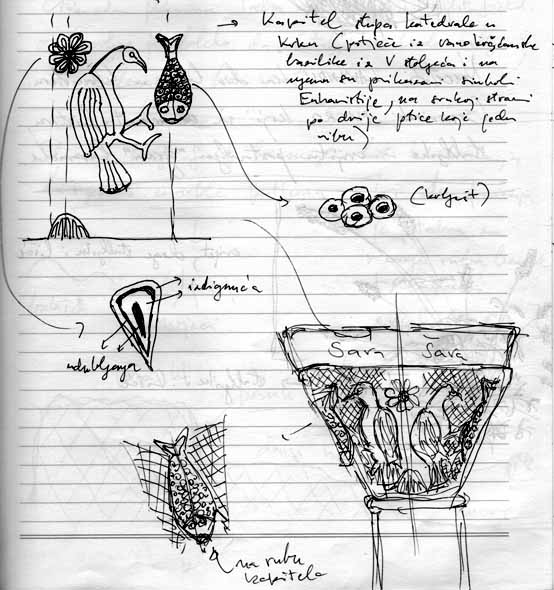
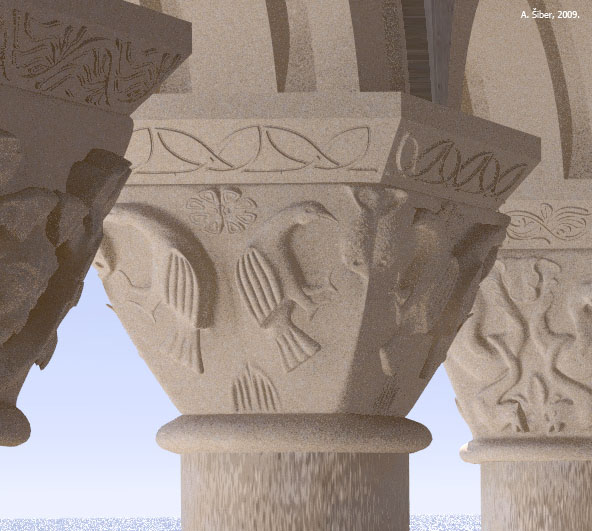
A capital of the column of the cathedral in Krk (originates from early christian basilica from fifth century and contains symbols of eucharistia, two birds eating fish on each side).
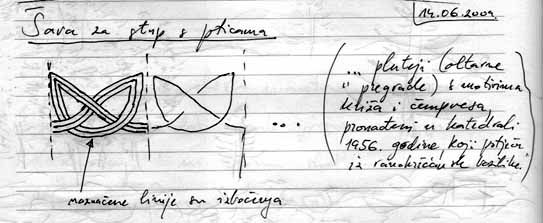
... altar dividers with motifs of cross and cypress, found in the cathedral in year 1956, that originate from the early christian basilica.
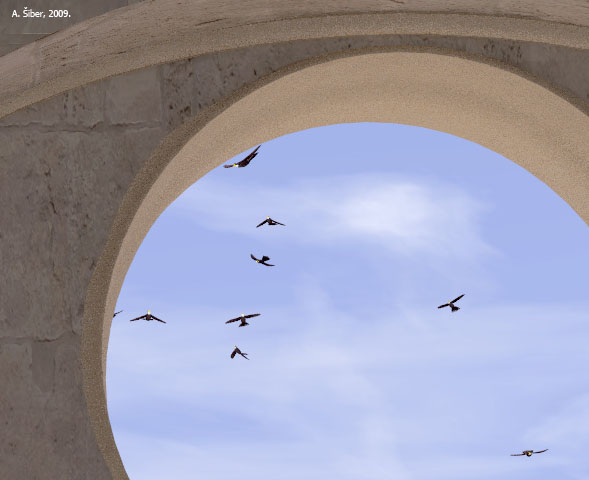
>> Apus apus.
>> Common swift.
At the first sight similar to swallow, but not related to that specie. The similarity between them is a consequence of convergent evolution, due to similar life styles.
"The loudest and the most penetrating were the shrieking voices of small swifts that were flying around with great speed. Their motion was extremely unpredictable since they developed a flying technique that enabled them to spend more than a half of the time gliding vibrantly or even falling, and in those moments when they used the strength of their wings, they could abruptly change the direction, using their forked tails to revolve around their axes in all sorts of ways. It looked as if they were particularly upset about something, although their energetically wasteful and chaotic motion could also be a habit of this tireless specie." (from "Problem promatrača" (Problem of the observer), first chapter)| << After the cataclysm | Sea cave >> |
Last updated on 11th of September 2009